
Practical buyer’s guide
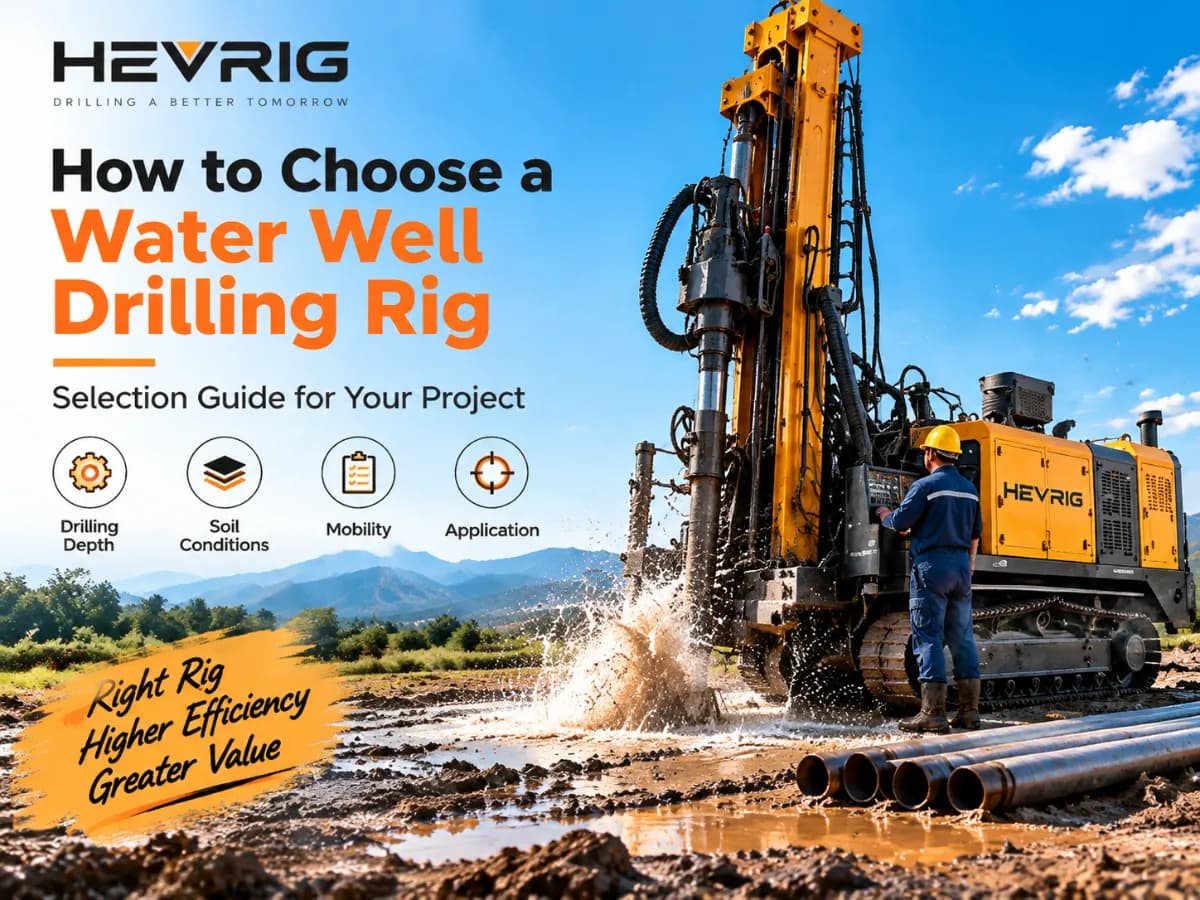
How to Choose a Water Well Drilling Rig
The right rig is not simply the one with the greatest drilling depth. Ground conditions, bore diameter, site access and the chosen drilling method all shape a reliable—and economical—setup.
Compare rig options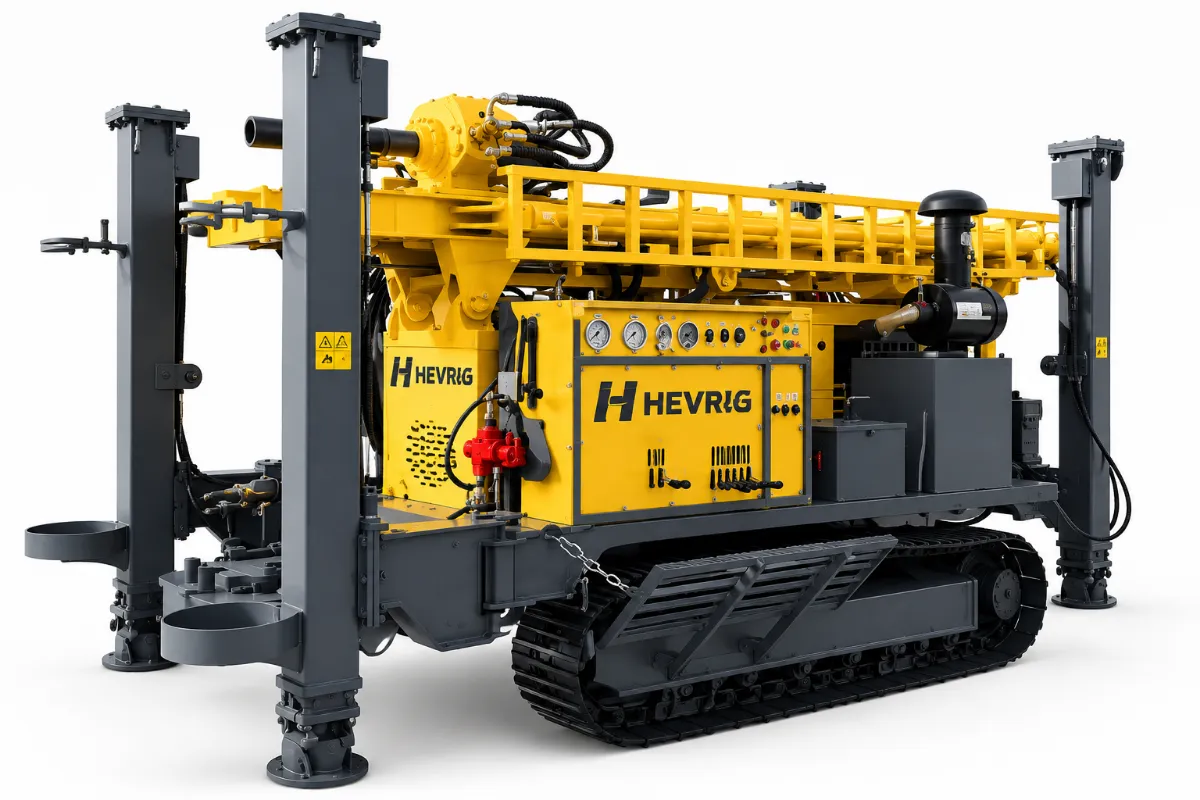
Start with the job
Four questions narrow the choice quickly
A water well drilling rig turns rotary torque, feed force and flushing power into a stable borehole. But the same machine will not be equally efficient in loose soil, fractured limestone and hard granite. Before comparing model numbers, define the actual work.
Flexible mobility
Crawler water well drilling rigs
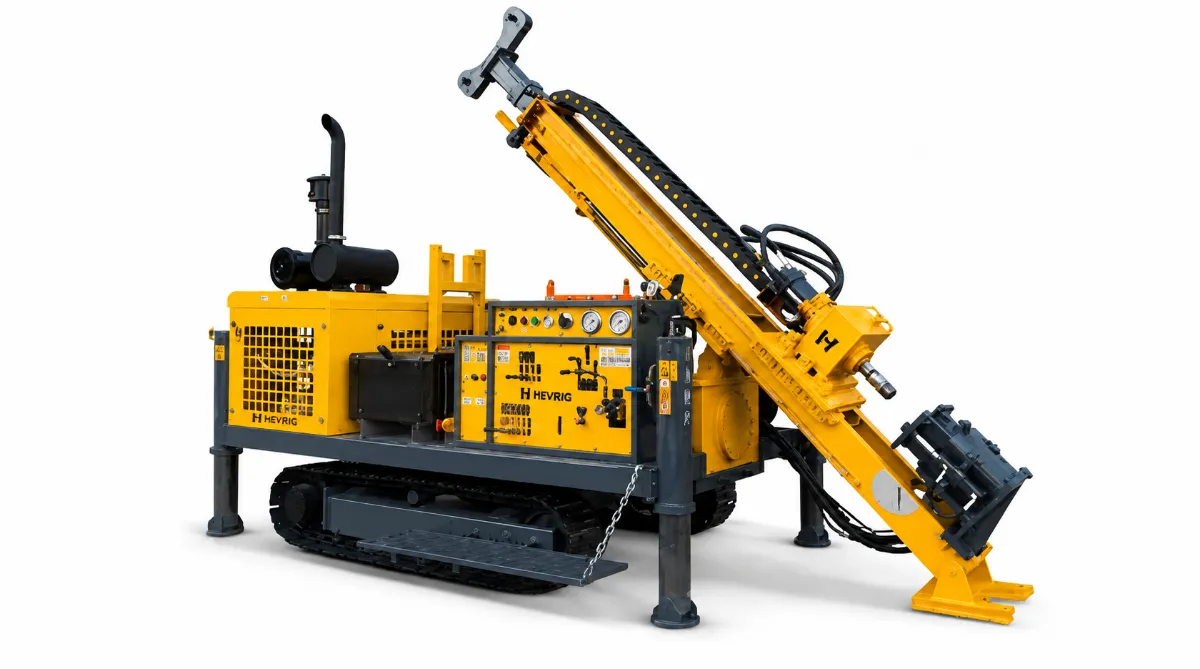
A crawler rig is often the practical choice for farms, mountain projects and uneven construction sites. The tracked undercarriage spreads machine weight, improves traction and provides a stable base during drilling.
The HEVRIG HVPW range gives buyers a clear model path from the compact HVPW200 through HVPW260, HVPW300, HVPW350, HVPW400 and the larger HVPW600 and HVPW800. Select the model only after matching the job’s geology, bore requirements and preferred drilling method.
Mechanical top drive
When a compact top-drive rig makes sense
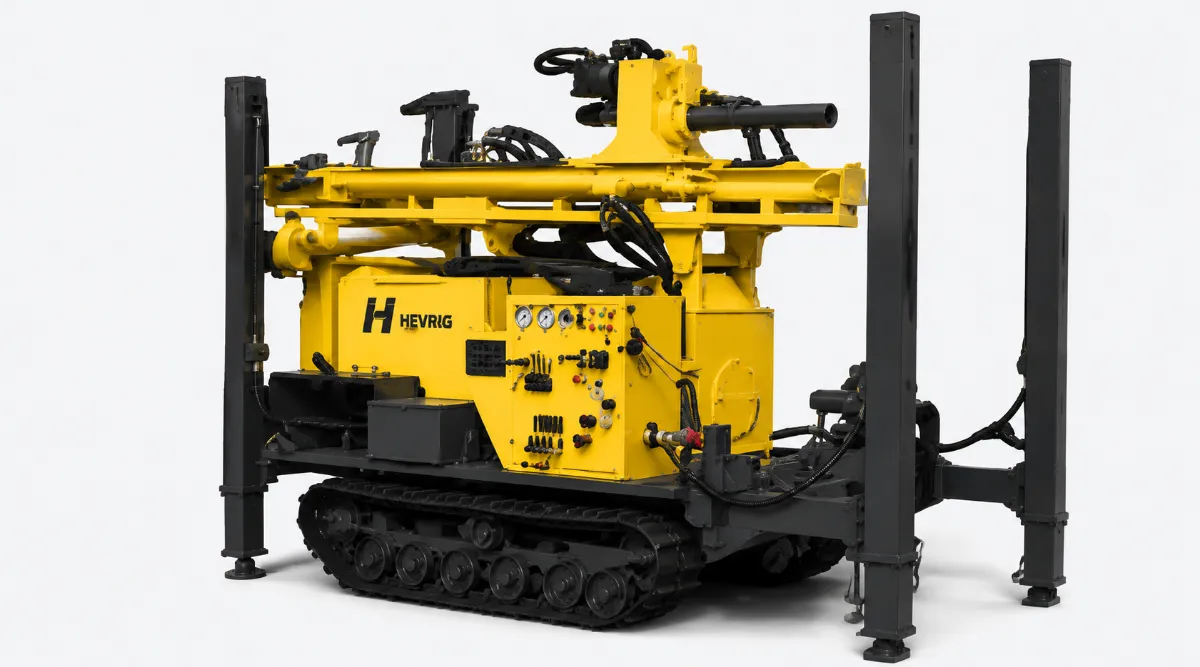
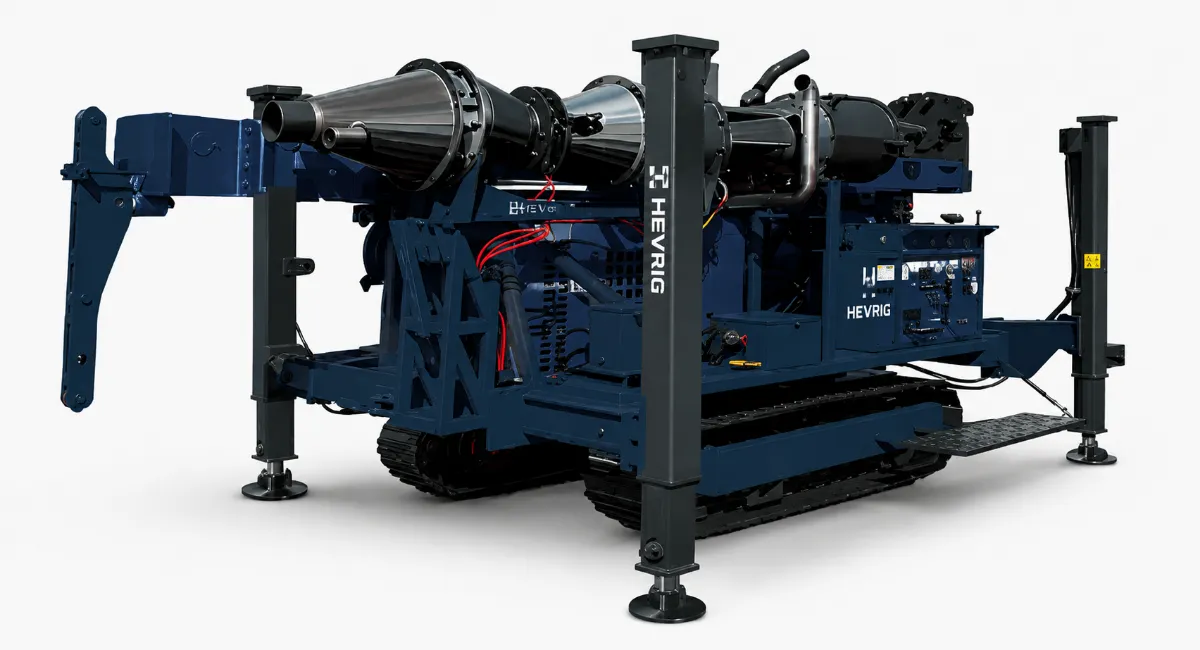
Mechanical top-drive rigs offer a straightforward option when the project calls for a compact crawler platform and practical field handling. HEVRIG lists the HVMT280, HVMT350 and HVXMT350 in this product family.
The HVMT280 shown here can be considered alongside the HVPW range when transport footprint, site access and the required drilling method are central to the buying decision.
A sensible selection sequence
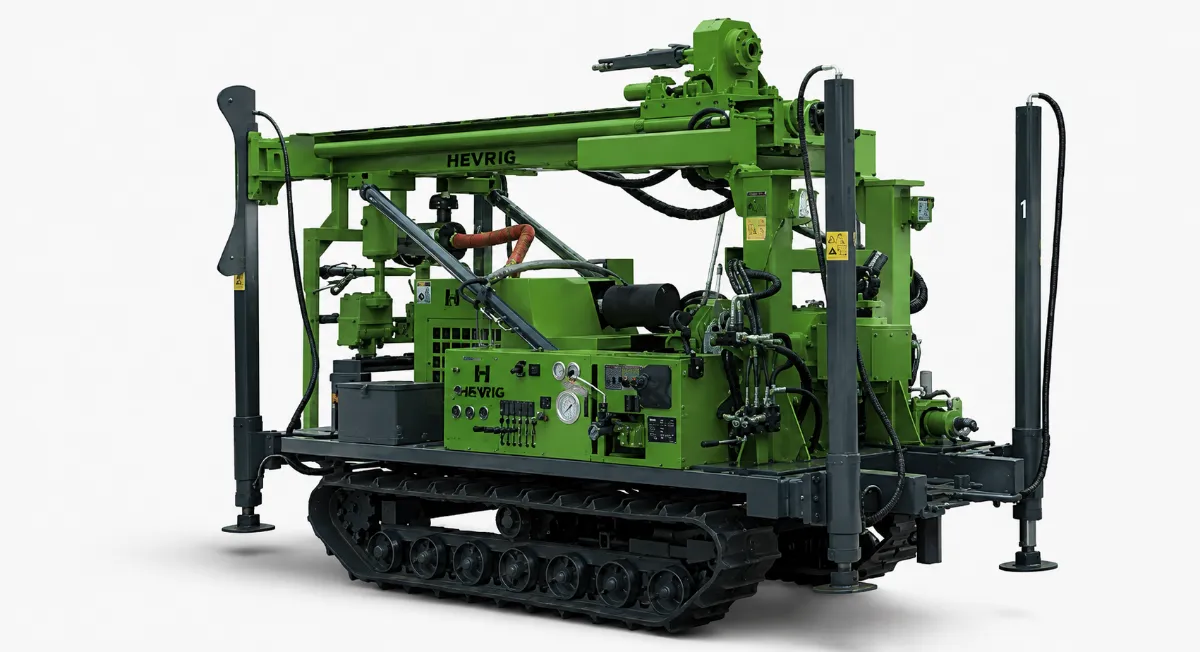
Match the drilling system before the accessories
Define the formation
Collect local bore logs or nearby well records when available.
Set depth and diameter
Add a realistic reserve without oversizing the whole machine.
Choose air or mud
DTH air drilling excels in rock; mud rotary supports softer formations.
Size the package
Match compressor, pump, rods, hammer and bits to the selected rig.
Quick comparison
HEVRIG drilling rig families at a glance
The current HEVRIG catalog covers water-well construction, core recovery, hard-rock hole drilling and reverse-circulation sampling. Final configuration should still be confirmed against local geology and operating conditions.
| Product family | Models listed | Primary role | Selection focus |
|---|---|---|---|
| Water well drill rig | HVPW200–HVPW800; HVCIN-T1/T3/T6 | Water-well construction | Depth, diameter and geology |
| Mechanical top drive | HVMT280, HVMT350, HVXMT350 | Compact general drilling | Method, access and pipe handling |
| Hydraulic core drill rig | HVHY400–HVHY2000 | Geological core recovery | Core size and sample quality |
| DTH drill rig | HVDTH452, HVDTH590, HVDTH598 | Hard-rock drilling | Air pressure, torque and hole size |
| Reverse circulation rig | HVRC500 | Fast sample-return drilling | Sample recovery and logistics |
Exploration work
Core drilling rigs serve a different purpose
A core drilling rig is selected when the goal is to recover an intact cylindrical sample for geological analysis—not simply to create a production water well. HEVRIG’s hydraulic core line currently includes HVHY400, HVHY600, HVHY800, HVHY1000, HVHY1600 and HVHY2000.
Mining exploration, geotechnical surveys and mineral evaluation require careful sample recovery, controlled drilling pressure and the correct core barrel. Treat core drilling as its own equipment category rather than judging it by water-well specifications.
Specialized drilling methods
DTH and reverse circulation solve different jobs
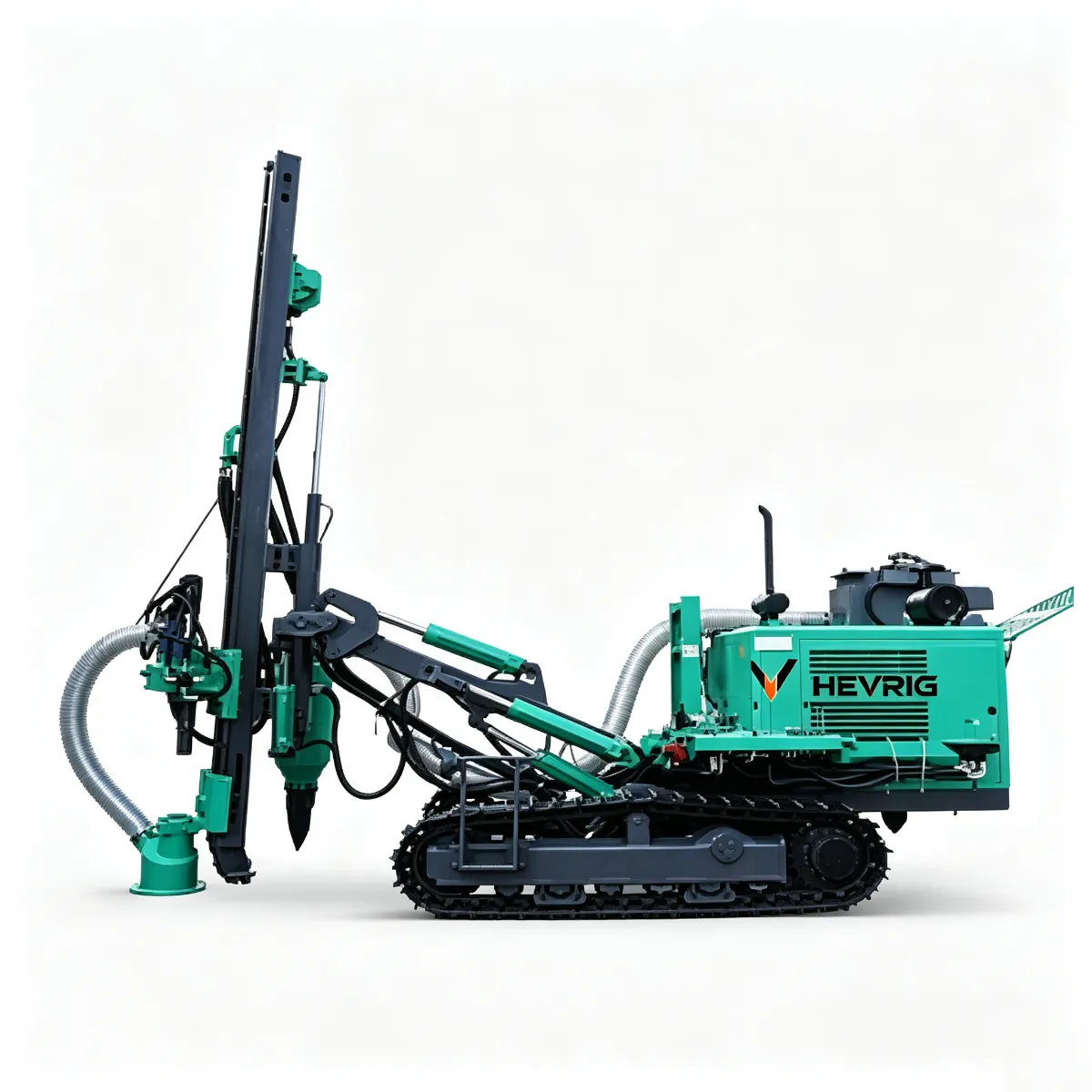
The HVDTH590 is built for hard-rock hole drilling. HEVRIG lists a 34 m drilling depth, 90–300 mm hole range, 6,000 N·m maximum torque and 1.2–2.5 MPa working pressure for this model.
The HVRC500 belongs to the reverse-circulation category, a method chosen when rapid, representative sample return is important. Comparing the two starts with the result required: a production hole, a blast hole or a geological sample.
- HVDTH590 for DTH hard-rock drilling
- HVRC500 for reverse-circulation sampling
- HVHY series for hydraulic core recovery
- HVPW series for water-well projects
Common questions
Before requesting a quotation
What size water well drilling rig do I need?
Start with target depth, required bore diameter, geology and drilling method. Use these project details to select the appropriate model within the HEVRIG HVPW range.
Does a pneumatic rig need an air compressor?
Yes. DTH air drilling requires a compressor matched to the rig, hammer, depth and bore diameter. Mud rotary configurations use a mud pump instead, and some projects benefit from both systems.
When should I choose a core, DTH or RC rig?
Choose a core rig for intact sample recovery, a DTH rig for efficient hard-rock hole drilling, and a reverse-circulation rig when fast, representative sample return is central to the project.
What information should I send to the supplier?
Share target depth, bore diameter, known geology, project location, preferred power source and site-access conditions. Photos of the site and nearby drilling records can make the recommendation more accurate.
Plan the configuration
Bring the project data. Build the right drilling package.
Depth alone is not enough. A useful quotation should connect the rig, drilling method, compressor or mud pump, tooling and shipping plan.