

Drilling fundamentals
Understanding Water Well Drilling Rigs
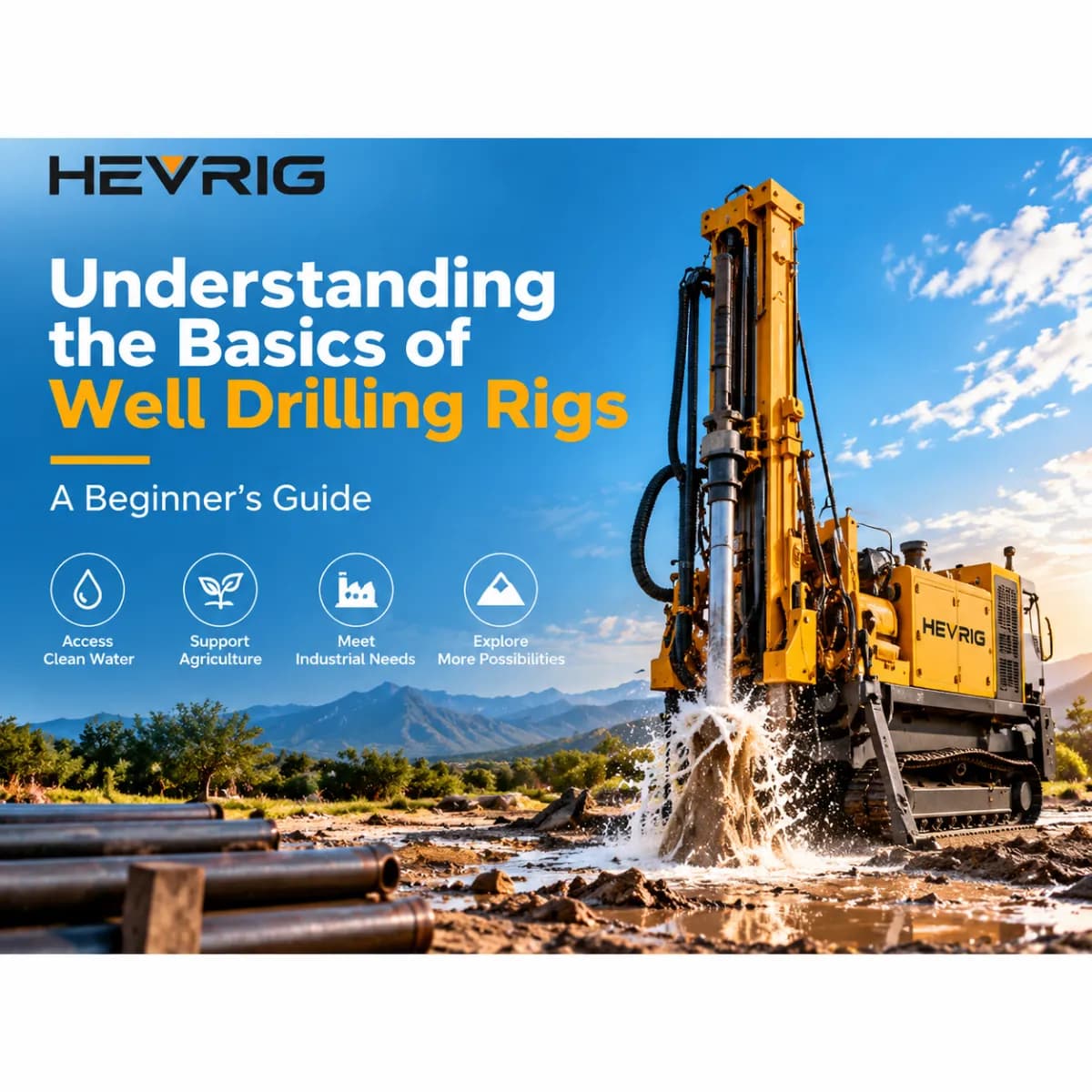
A water well drilling rig looks complicated because many systems work at once. At its core, however, the job is straightforward: break the formation, keep the borehole stable and remove cuttings until the target aquifer can be completed as a productive well.
Explore drilling methods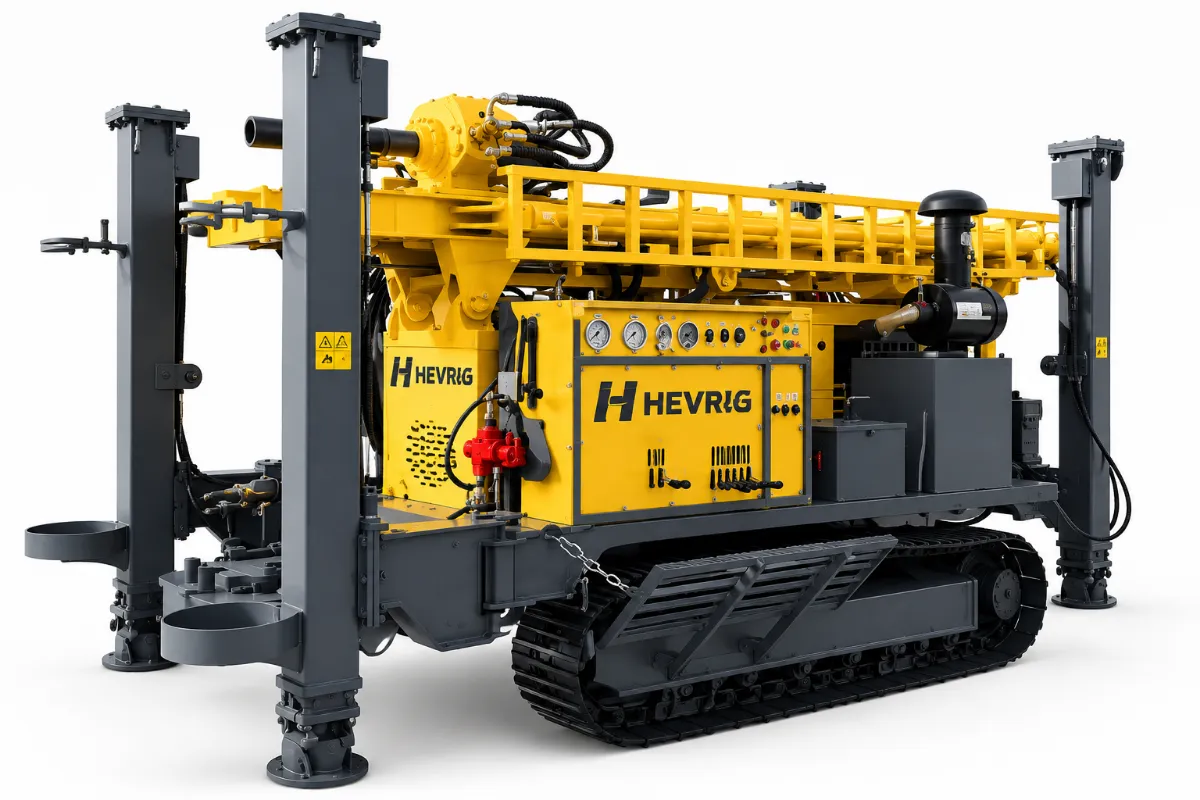
The basic idea
What a well drilling rig actually does
The machine creates a controlled borehole through soil and rock. Depending on the method, a rotating bit cuts or crushes the formation, while hydraulic feed keeps the tool advancing. Air, water or drilling fluid then carries broken material back to the surface.
These functions must remain balanced. More torque does not help if the flushing system cannot clean the hole, and a powerful compressor cannot compensate for a rig that lacks the pullback force needed to recover the drill string. Good drilling performance comes from a complete system rather than a single impressive specification.
Machine anatomy
The main parts of a water well drilling rig
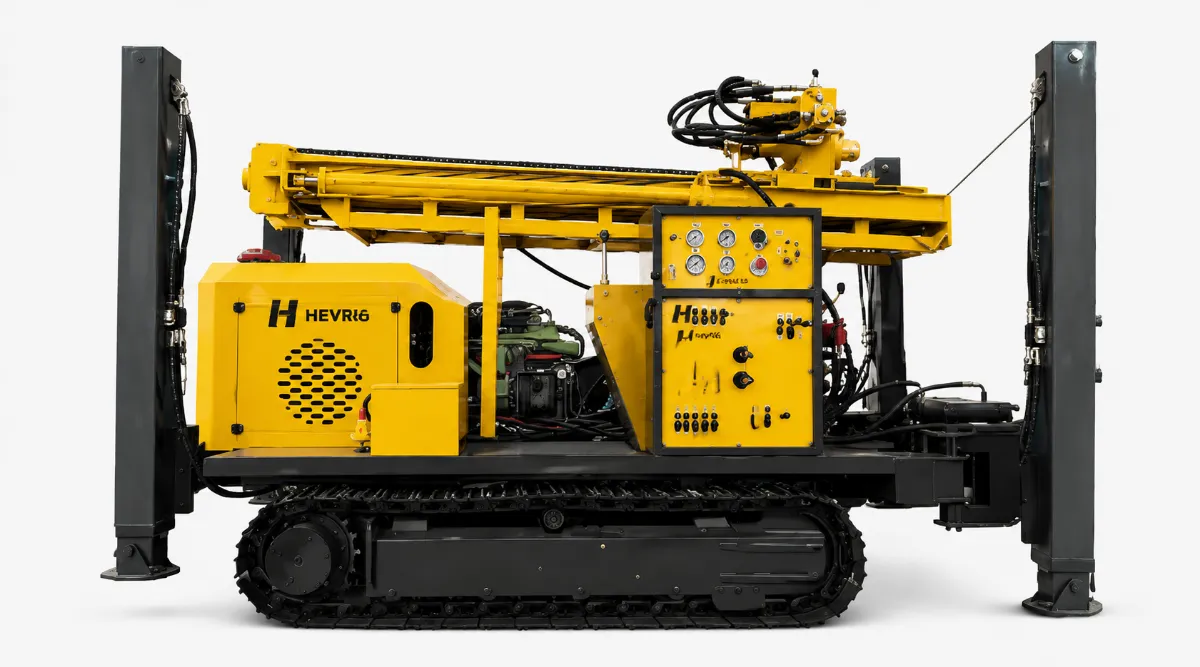
Layouts vary between crawler, truck-mounted and compact machines, but most modern rigs share the same working systems.
Supports the rotary head and guides drill-pipe handling.
Supplies energy to hydraulic and mechanical functions.
Delivers torque and rotation to the drill string.
Controls downward force and pullback during drilling.
Transfers power and flushing media to the bit.
Uses compressed air or fluid to clear cuttings.
Method 01
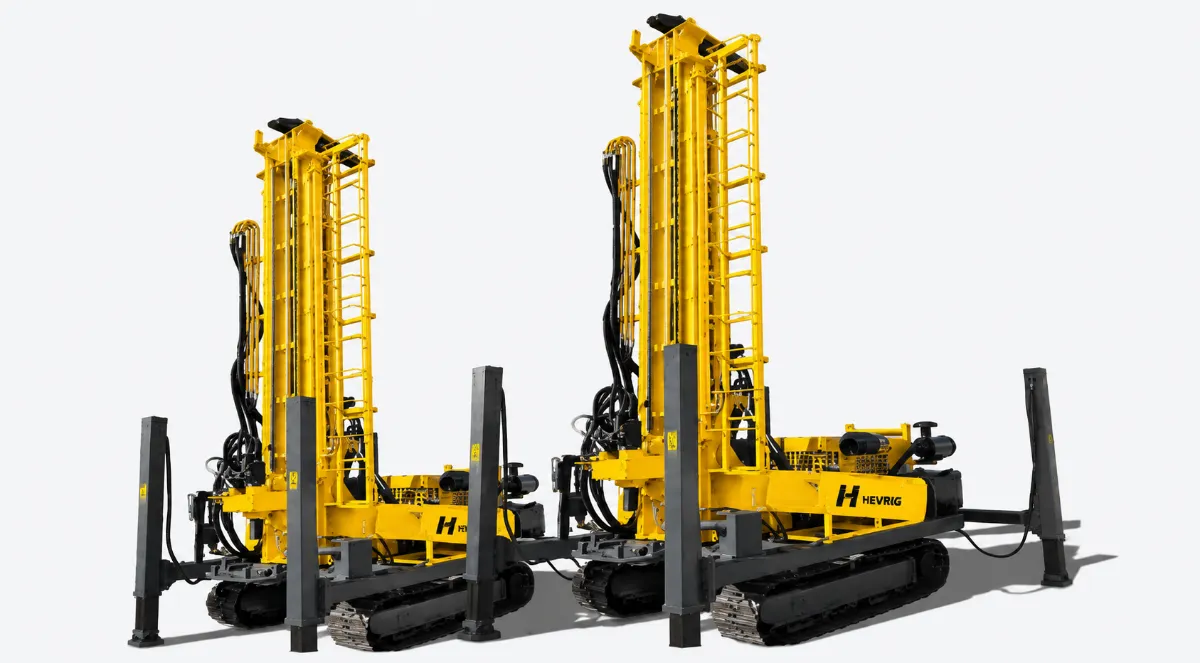
Mud rotary drilling for loose formations
Mud rotary drilling is commonly used in sand, clay, gravel and other formations that may not support an open borehole. A pump sends drilling fluid down the drill pipe. The returning fluid lifts cuttings and helps support the borehole wall until casing is installed.
Fluid properties matter. If the mixture is too thin, the hole may not stay clean or stable; if it is too heavy, circulation becomes inefficient and well development takes longer. The mud pump, settling pit and fluid-management plan therefore belong in the equipment decision from the start.
Method 02
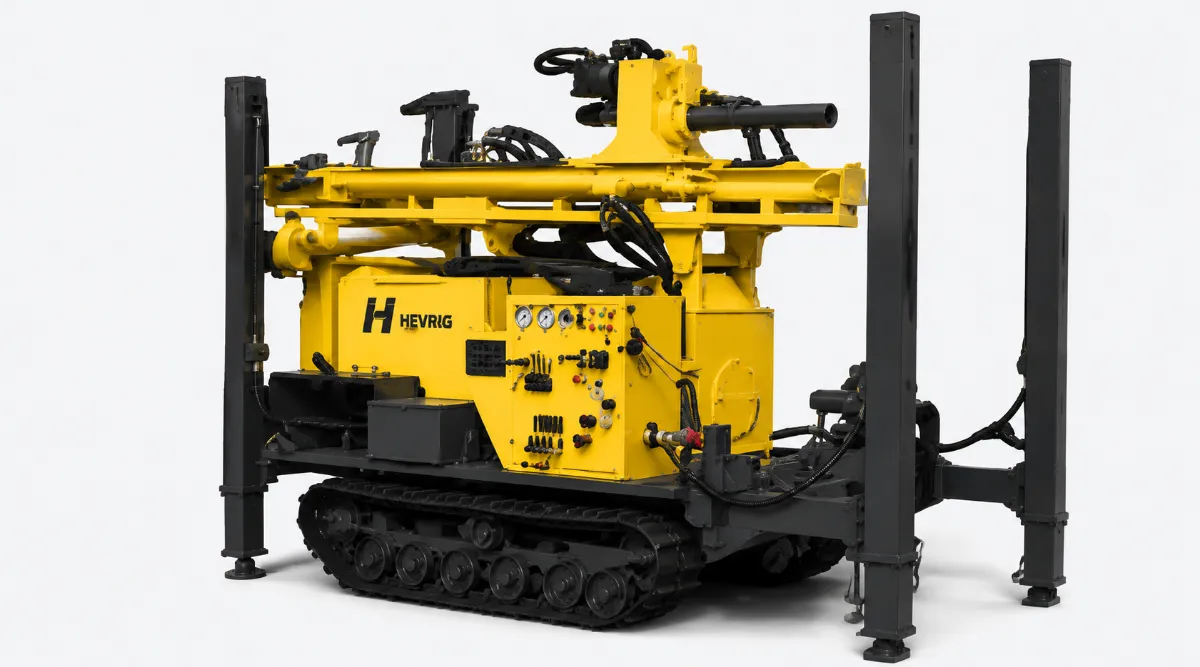
DTH air drilling for competent rock
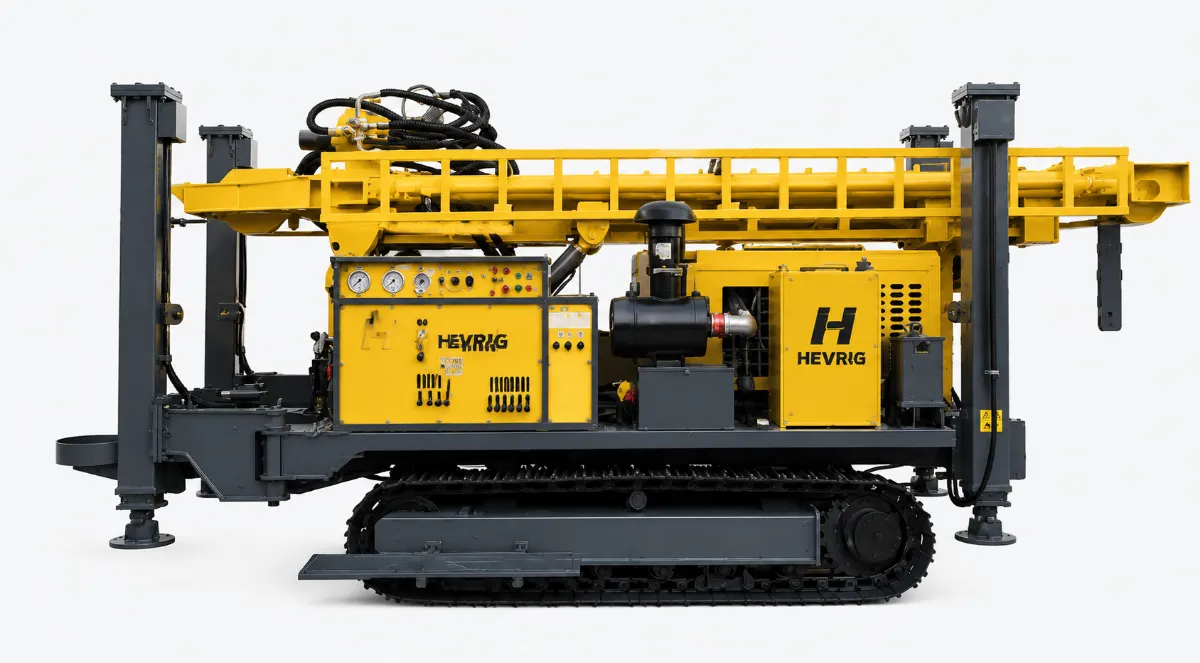
Down-the-hole drilling places a pneumatic hammer directly behind the bit. Compressed air drives the hammer and returns rock chips through the annular space around the drill pipe. Because impact energy is delivered at the bottom of the hole, DTH drilling is a productive choice in hard limestone, granite and other consolidated rock.
The compressor must be selected together with the hammer, bit diameter and target depth. Air pressure keeps the hammer working; air volume determines whether the hole can be cleaned effectively. An undersized compressor often means slower penetration, regrinding of cuttings and higher fuel cost per metre.
Ground conditions
Let the formation choose the drilling method
A bore rarely passes through one uniform layer. The driller may encounter topsoil, loose sand, weathered rock, fractured zones and hard bedrock in a single hole. Nearby bore records are useful, but they are not a guarantee; the crew still needs enough flexibility to respond underground.
Watch the return flow, penetration rate, rotary pressure and changes in cuttings. These observations help confirm when to adjust rotation, feed, air, fluid properties or bit type.
Clay and cohesive soil
Rotary drilling with fluid circulation usually gives steady progress. Control sticky cuttings and keep the return channel open.
Loose sand and gravel
Borehole stability becomes the priority. Mud support, temporary casing or simultaneous casing may be needed to avoid collapse.
Weathered or fractured rock
A mixed strategy may work best. Expect lost circulation, unstable intervals and changing penetration as the formation varies.
Competent hard rock
DTH air drilling can provide strong penetration and clean returns when compressor pressure and volume match the hole.
Other drilling approaches
Where auger and cable-tool drilling still fit
Not every well requires a high-capacity rotary rig. Continuous-flight and hollow-stem augers are useful for shallow holes in cohesive soils, environmental sampling and work where a clean, easily observed soil return is important. Their limitation is clear: loose sand below the water table and competent rock can quickly stop progress.
Cable-tool drilling uses repeated lifting and dropping of a heavy bit. It is slower than modern rotary methods, yet its simple equipment, low fluid demand and clear formation samples can still suit particular locations. For commercial water-well programs, rotary and DTH rigs usually offer higher daily production, but method selection should follow the ground—not habit.
From site to water
The well drilling process in eight practical stages
Review the site
Study nearby bore logs, access, hazards, expected geology and local well regulations.
Level the rig
Prepare stable ground, position the machine and raise the mast vertically.
Drill the surface section
Open the initial bore and protect loose upper ground with surface casing where required.
Drill to target depth
Add drill pipe while monitoring penetration, pressure, returns and formation changes.
Install casing and screen
Use casing to support the well and screen across the selected water-bearing interval.
Grout the annulus
Seal the space outside the casing to reduce pathways for surface contamination.
Clean the well
Remove drilling residue and fine particles until the water and formation respond freely.
Confirm performance
Pump-test the well, check yield and water quality, then finish the protected wellhead.
Equipment formats
Common water well rig types compared
The drilling method describes what happens in the borehole; the rig format describes how the machine is packaged and moved. Both choices affect daily output and operating cost.
| Rig format | Best suited to | Main advantage | Check before buying |
|---|---|---|---|
| Crawler rig | Farms, rough ground and off-road sites | Traction and stable working platform | Transport width, weight and ground pressure |
| Truck-mounted rig | Contractors moving frequently between open sites | Fast road relocation | Road rules, chassis support and site access |
| Trailer or mobile rig | Smaller projects and accessible roads | Simpler towing and mobilization | Towing capacity and setup stability |
| Compact top-drive rig | Confined sites and moderate bore programs | Smaller working footprint | Mast clearance, pipe length and pullback |
HEVRIG product path
Move from project data to the right rig family
HEVRIG organizes its well-drilling offer around different mobility and operating needs. The model name should be treated as a starting point for discussion, not a substitute for a site review. Depth capacity, bore diameter and supporting equipment must be confirmed for the intended formation.
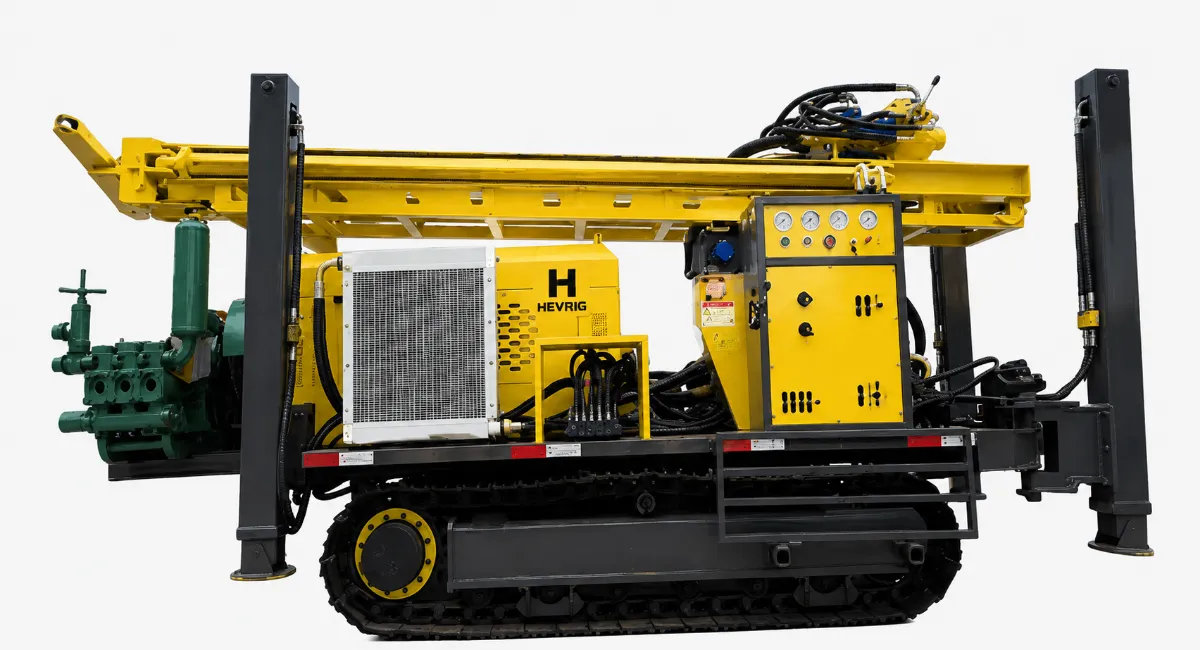
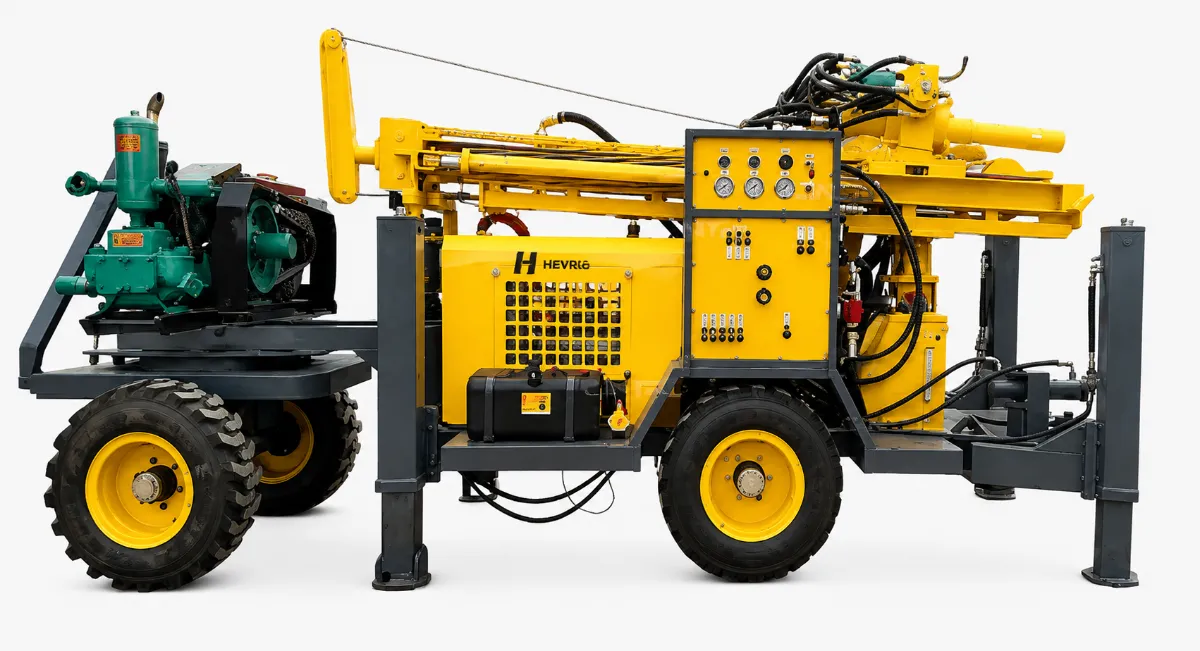
Within the crawler range, HVPW models progress from compact units for routine wells to larger machines intended for deeper and wider drilling. HVCIN models provide a mobile alternative, while the HVMT family offers mechanical top-drive configurations for buyers who value a straightforward layout and compact platform.
Crawler range
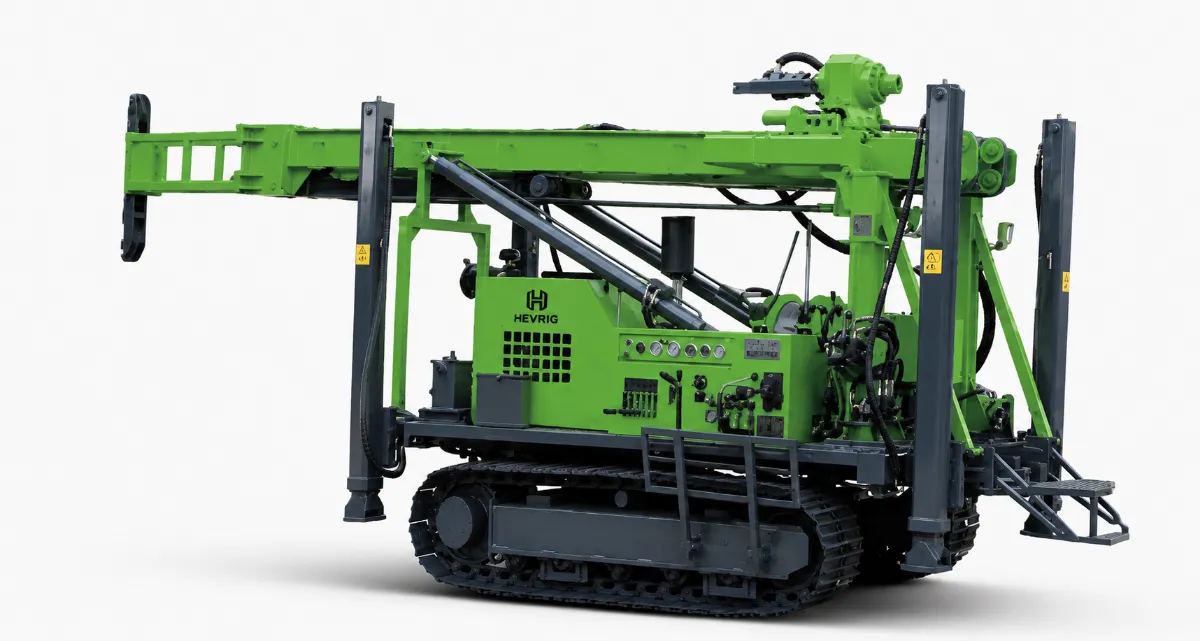
HVPW Series
Tracked water-well rigs for off-road access, stable setup and projects that require air or fluid drilling configurations.
Mobile range
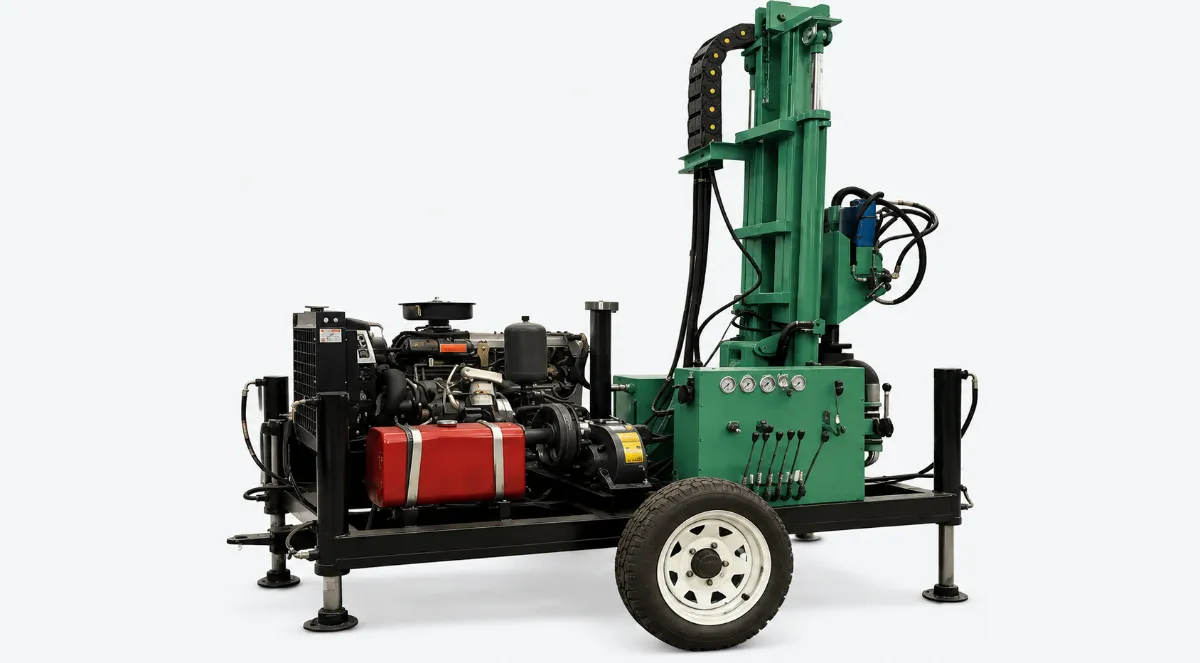
HVCIN Series
Mobile drilling platforms for buyers who prioritize relocation between sites and an integrated transport format.
Top-drive range
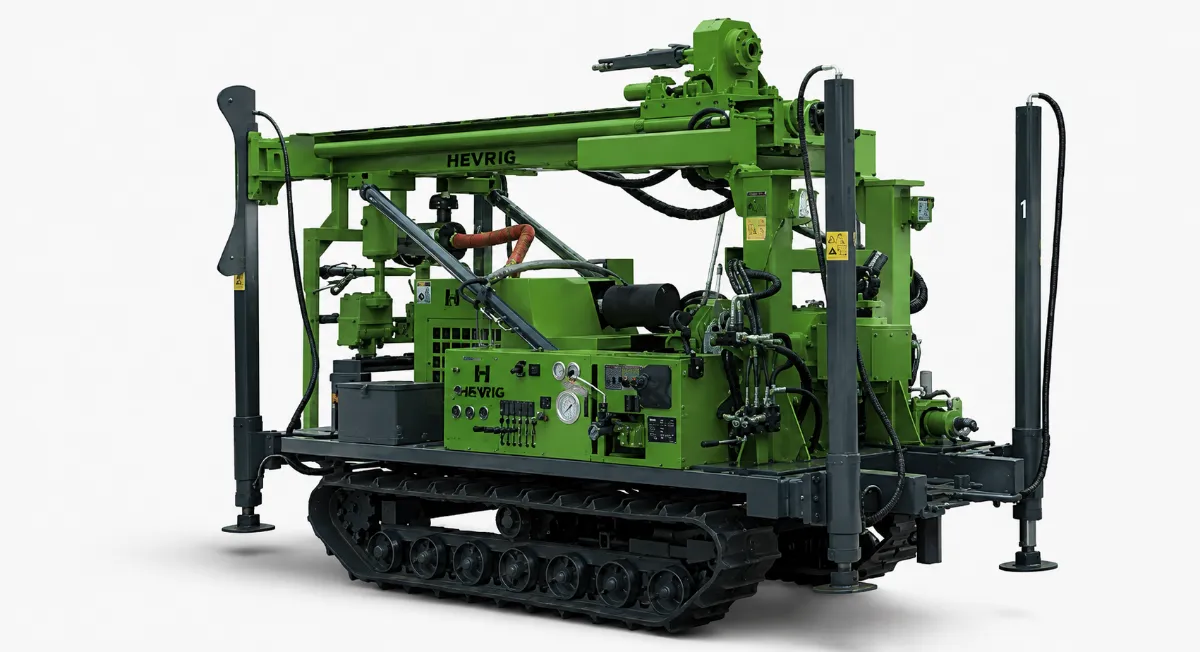
HVMT Series
Mechanical top-drive rigs suited to projects where compact dimensions, familiar mechanics and practical pipe handling matter.
Rig selection
Choose for the formation—not the catalogue headline
Maximum depth is only the first filter. A useful rig comparison should include finished bore diameter, torque, feed and pullback force, drill-pipe size, compressor or mud-pump demand, mast capacity, fuel use and transport dimensions.
Begin with the job data, then work backwards to the machine:
- Expected geology: loose sediment, mixed ground or competent rock
- Target depth and diameter: including casing and completion requirements
- Preferred method: mud rotary, DTH air or a combined configuration
- Site conditions: access width, slope, altitude, temperature and road limits
- Available support: compressor, pump, tooling, service skills and spare parts
How to read the main specifications
Specifications also interact. A wide hole at maximum depth may require more torque, greater pullback, larger pipe and far more compressor output than a narrow hole in the same ground. Ask the supplier to confirm the proposed configuration against one realistic duty point—for example, the expected diameter at the normal working depth—rather than comparing maximum figures from separate rows.
The HEVRIG HVPW series offers crawler water well rigs across several working capacities, while the HVCIN mobile series and HVMT mechanical top-drive range provide alternatives for projects with different transport and site requirements. Final configuration should always be checked against actual geological and operational conditions.
Daily reliability
Maintenance begins before the first shift
Most drilling delays do not begin as major failures. They start as a small leak, loose connection, blocked filter, worn thread or poor lubrication. A short inspection routine is cheaper than recovering a damaged drill string from a deep hole.
True ownership cost
The purchase price is only one line
Compare rigs using the cost per productive metre, not the invoice alone. A lower-priced machine becomes expensive if it drills slowly, consumes excessive fuel or waits weeks for a routine spare part.
- Fuel for the rig, compressor and mud system
- Bits, hammers, drill pipe and thread wear
- Filters, oils, seals and preventive service
- Transport, loading, insurance and import charges
- Operator training and local technician capability
- Downtime risk and critical-spares availability
Ask the supplier for a recommended commissioning kit and a separate list of fast-moving and critical spares. This makes the first-year budget more realistic and reduces avoidable downtime.
When performance drops, check the basics first
Slow penetration does not automatically mean the rig is underpowered. Inspect the bit for wear, confirm that rotation and feed suit the formation, and check whether cuttings are leaving the hole. Rising rotary pressure with poor returns may point to inadequate cleaning or a blocked annulus. Unstable pressure and lost fluid can indicate fractures or a collapsing interval.
If pipe connections overheat or wear rapidly, review alignment, thread cleanliness and make-up practice. If hydraulic temperature rises, inspect oil level, cooler airflow, filters and whether the machine is being held continuously at relief pressure. Record the formation and operating settings with each issue; that history makes troubleshooting faster on the next bore.
Buyer questions
Before requesting a quotation
What does a water well drilling rig do?
It combines rotation or percussion, feed force and a circulation medium to break the formation, remove cuttings and create a borehole that can be cased, screened and completed as a well.
Which drilling method is best for hard rock?
DTH air drilling is commonly used in competent hard rock. Compressed air powers the downhole hammer and carries cuttings to the surface. Depth, hole size and local geology still determine the final setup.
Do I need an air compressor or a mud pump?
DTH drilling requires a correctly matched compressor. Mud rotary drilling requires a suitable mud pump and fluid-management system. Mixed formations may call for both capabilities.
What project information should I send HEVRIG?
Send the target depth, finished bore diameter, expected geology, project location, preferred drilling method, access conditions and any locally available compressor, pump or drill pipe.
How much extra depth capacity should I buy?
A practical reserve helps when geology or the water level differs from the first estimate, but excessive oversizing increases transport, fuel and capital cost. Compare the normal working depth—not only the advertised maximum—with the weight of the intended drill string and casing.
Which spare parts should be ordered with a new rig?
Prioritize filters, seals, hydraulic-hose service items, sensors, wear pads and model-specific electrical parts. The tooling list should also include suitable bits, thread compound and inspection tools. Ask for separate commissioning, fast-moving and critical-spares lists.
What commonly causes slow drilling?
Typical causes include the wrong bit for the formation, worn cutting structure, insufficient air volume, poor mud properties, excessive or inadequate feed, blocked returns and unstable ground. Diagnose the complete drilling system before increasing power.
Build the complete package
A productive well starts with the right drilling system.
Share the geology, depth, diameter and site conditions. HEVRIG can help match the rig, flushing system and drilling tools to the work.